Redesigned from lead-screw tabs to motor-driven carbon-fiber flaps, with a metal 3D-printed hinge.
2024 NASA USLI National Champions (team).
Notre Dame Rocketry Team, NASA USLI · ACS Squad Member · Summer 2022–Spring 2024
Role
Member of the Apogee Control System (ACS) squad for Notre Dame’s NASA University Student Launch Initiative (USLI) vehicle.
Challenge
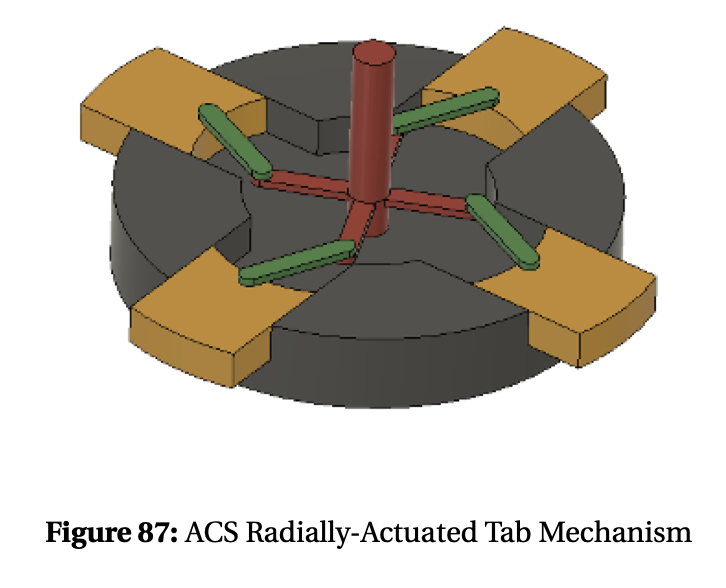
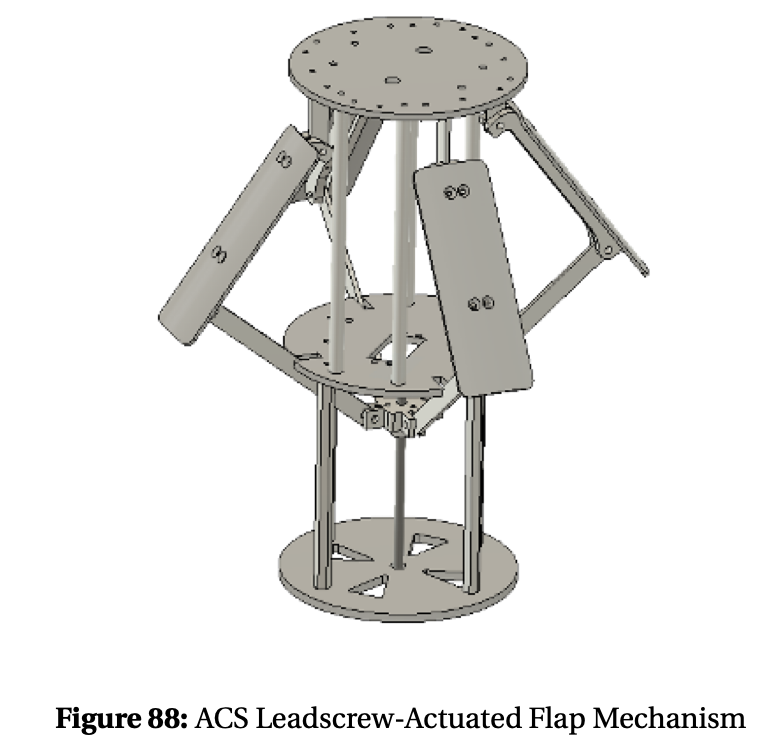
The inherited lead-screw drag-tab design was too large, too slow, and produced too little drag to control the vehicle’s apogee.
What I did
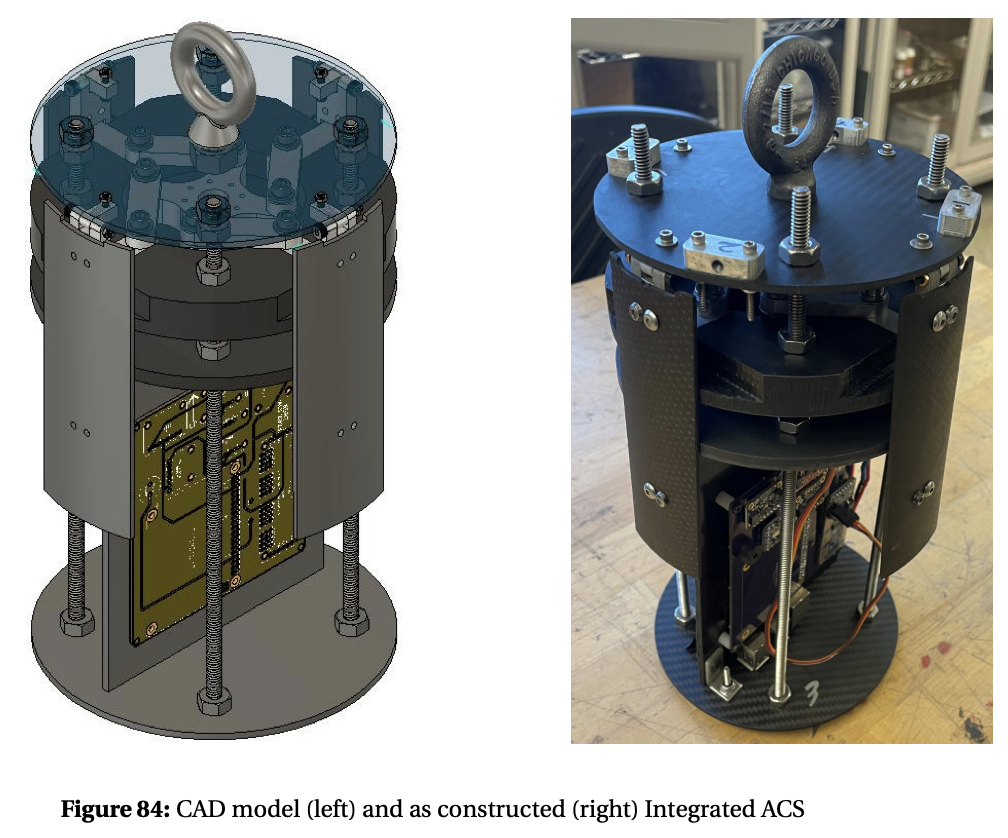
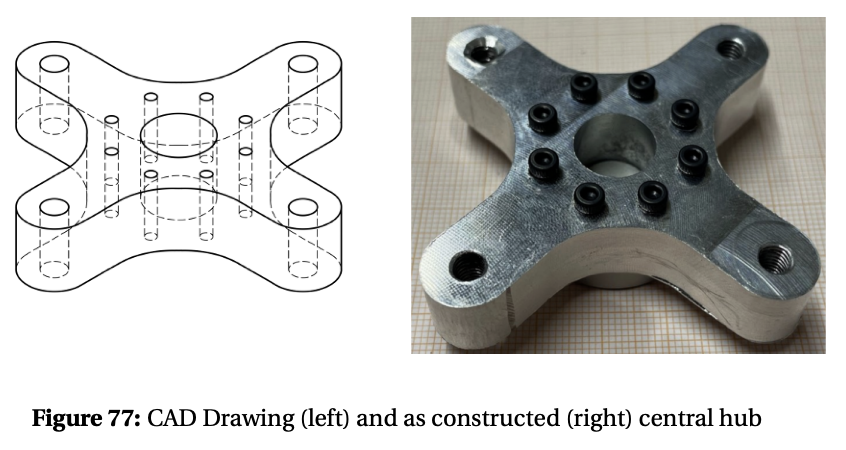
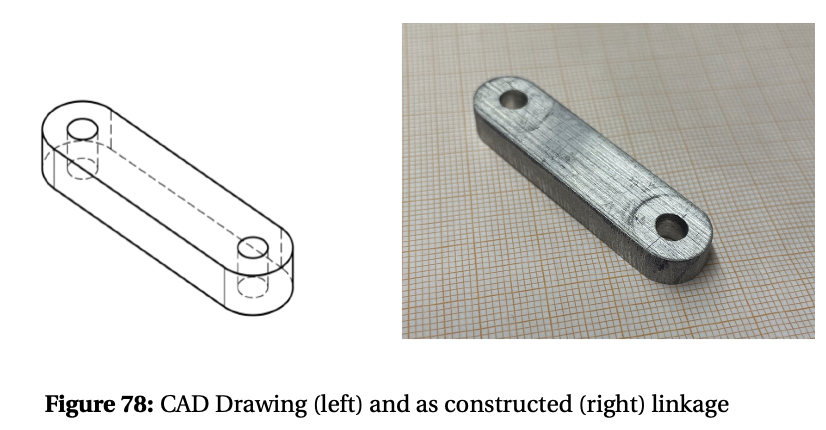
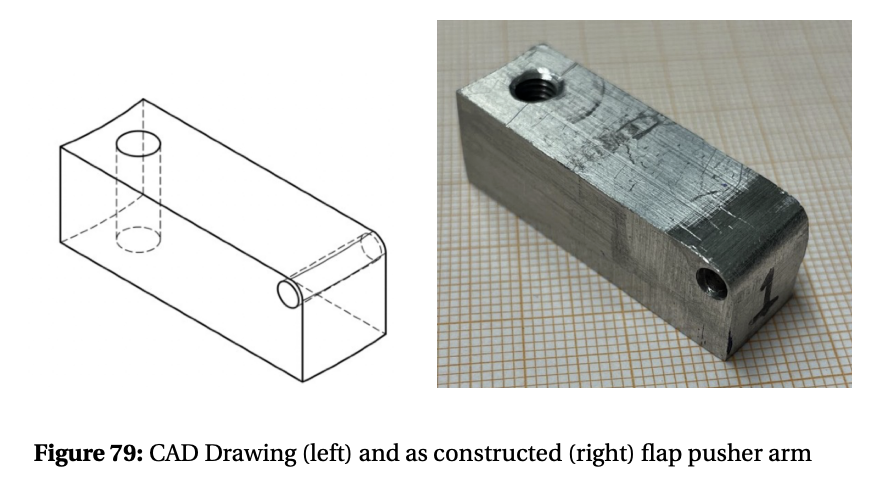
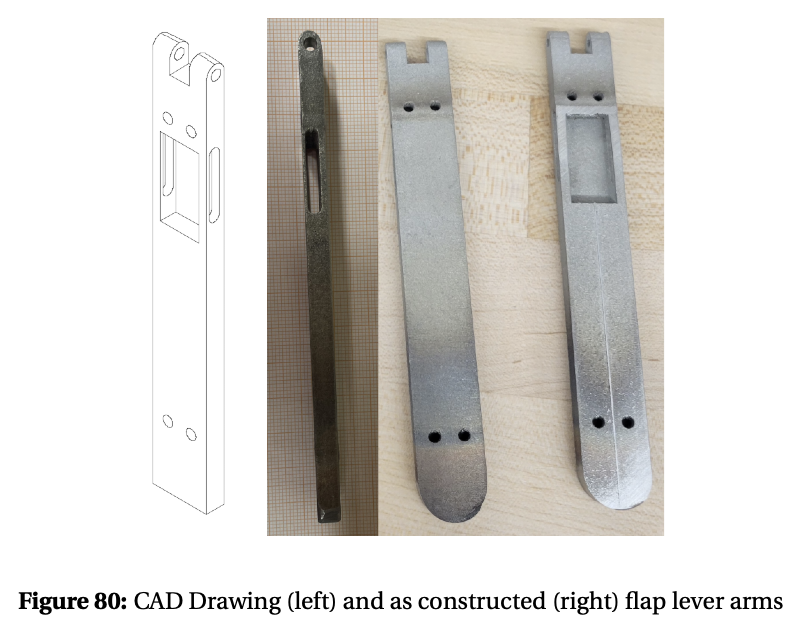
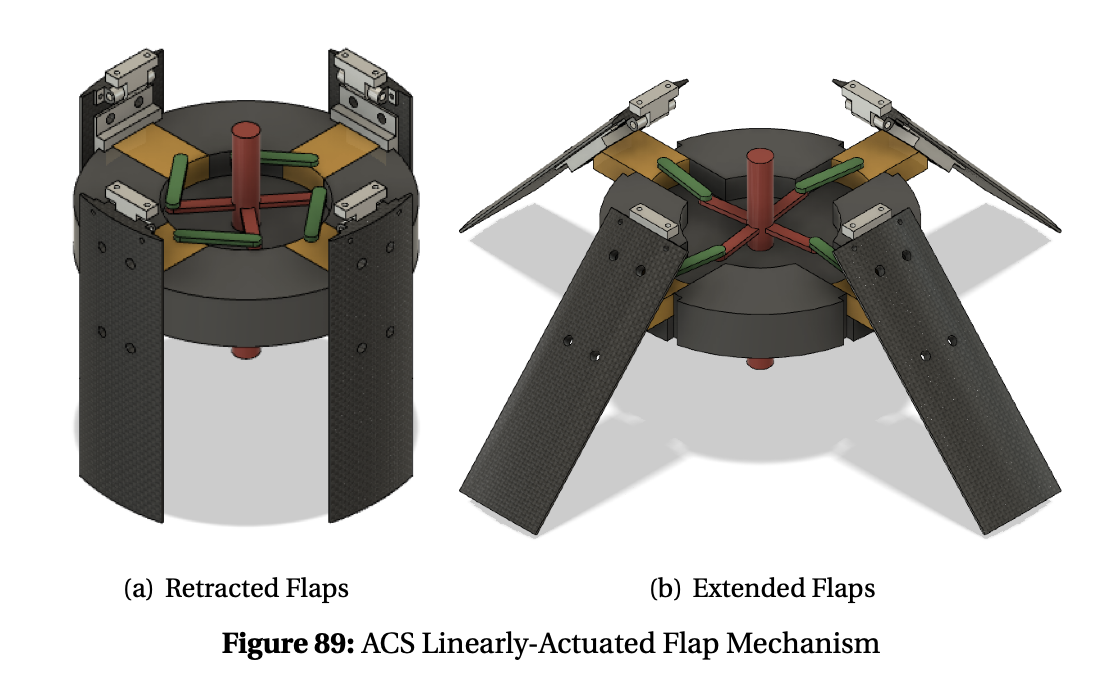
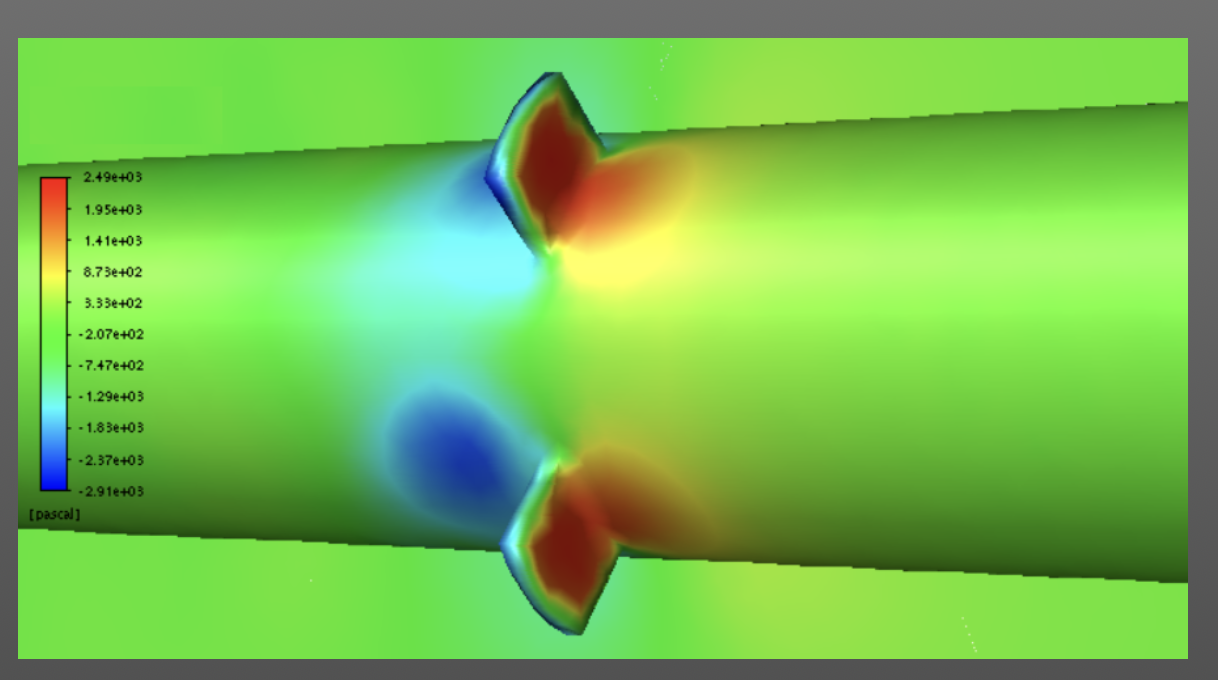
Redesign: Redesigned the ACS from first principles, replacing lead-screw drag tabs with motor-direct-drive rotational flaps — saving space, adding speed and surface area, and removing friction.
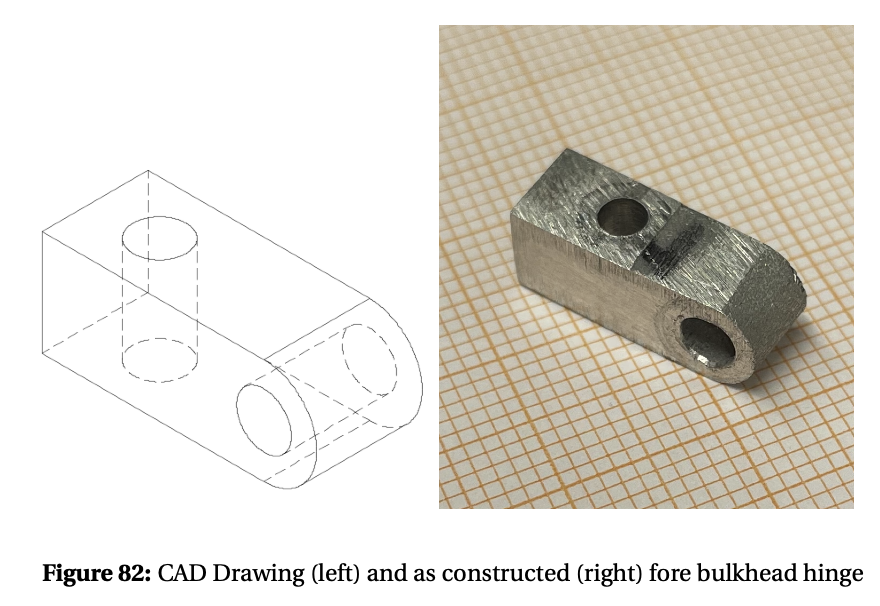
Hinge: Designed a conformal, low-friction metal hinge in CAD. After ruling out in-house machining and sand casting on tolerance, and with outsourcing over budget, printed it with fabrication lab technicians on the lab’s GE metal 3D printer.
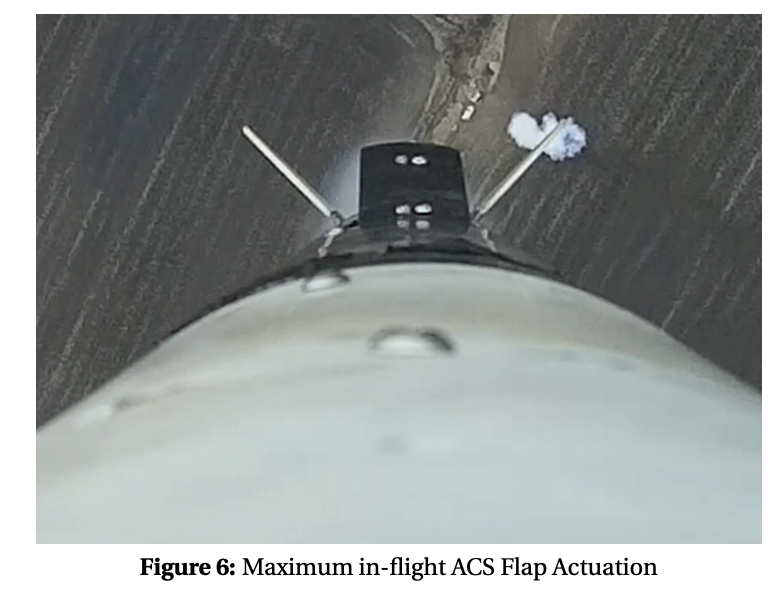
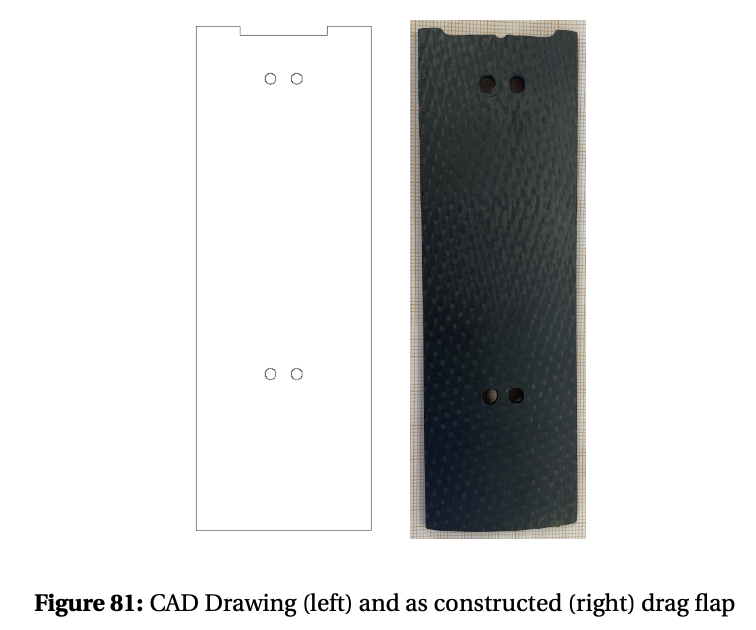
Drag flaps: Cut 4 carbon-fiber drag flaps (0–45° deployment) from the original body tube for more drag area at lower weight.
Results
Proven through assembly, testing, and flight: the vehicle stopped within 5 ft of its predicted apogee.
2024 NASA USLI National Champions.
USLI
ACS
CAD
CFD
Carbon fiber
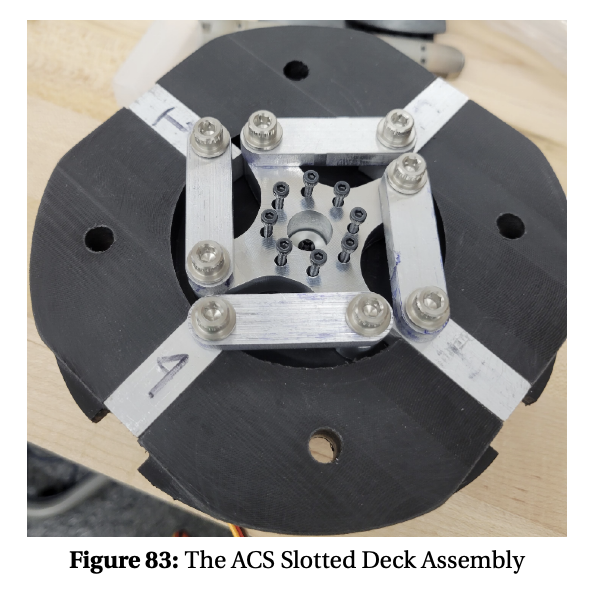
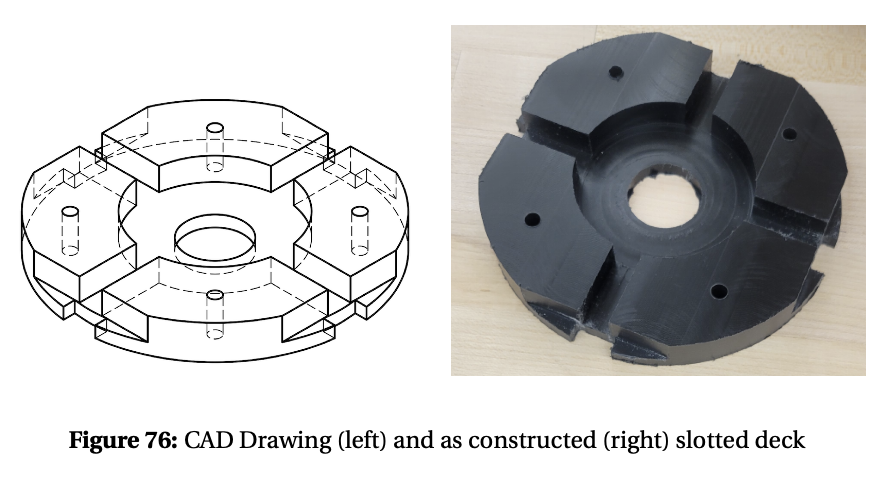
In-flight ACS flap actuationIntegrated ACS — CAD vs. as builtACS slotted deck assemblySlotted deck — CAD vs. as builtCentral hub — CAD vs. as builtLinkage — CAD vs. as builtFlap pusher arm — CAD vs. as builtFlap lever arms — CAD vs. as builtDrag flap — CAD vs. as builtFore bulkhead hinge — CAD vs. as builtRadially actuated tab mechanismLinearly actuated flap mechanismLeadscrew-actuated flap mechanismCFD pressure on ACS flaps