Rocketry Club at UAB · Cofounder, Inaugural President & Lead Engineer · 2024–Jan 2026
Role
Cofounded the Rocketry Club at the University of Alabama at Birmingham (UAB) and served as its inaugural president and lead engineer for the NASA University Student Launch Initiative (USLI).
Challenge
Stand up UAB’s first NASA USLI team from no members and no money — operating on about one-tenth of Notre Dame’s budget.
What I did
- Team & proposal: Co-authored the institution’s first proposal accepted into USLI. Recruited, retained, and led 25+ engineers in twice-weekly meetings; 6 earned National Association of Rocketry (NAR) Level 1 or Level 2 certifications.
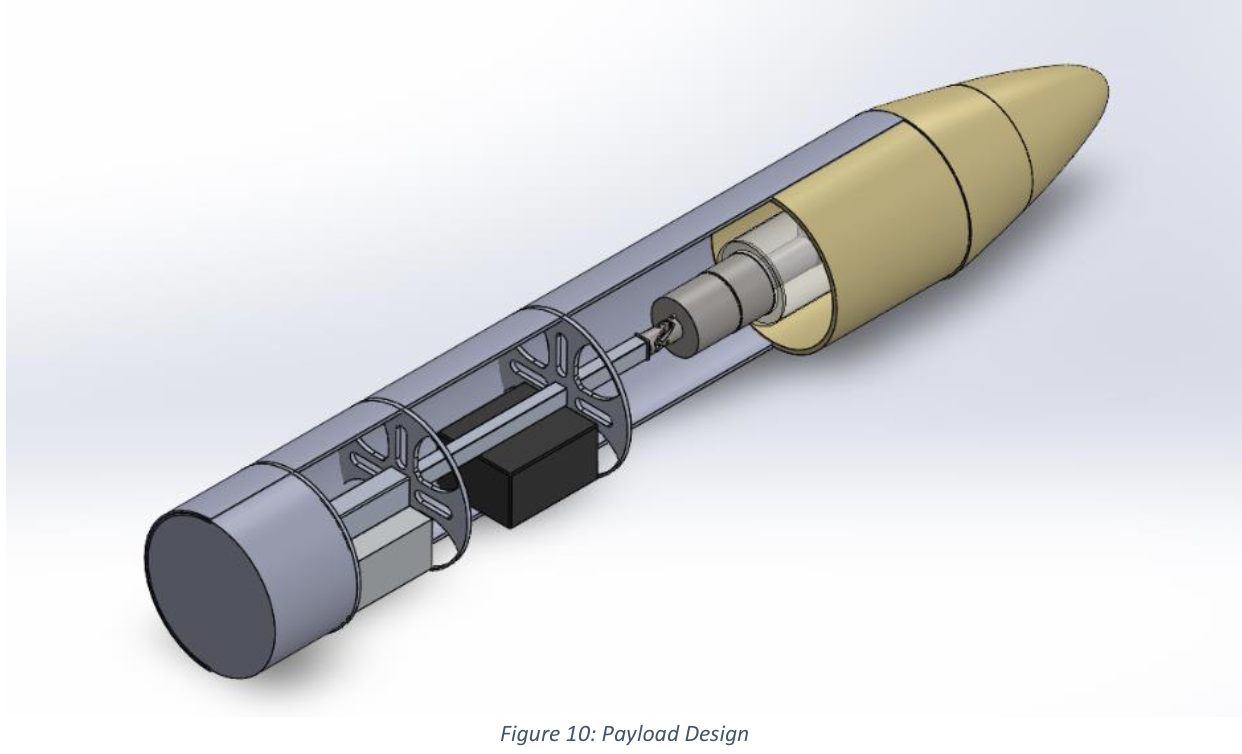
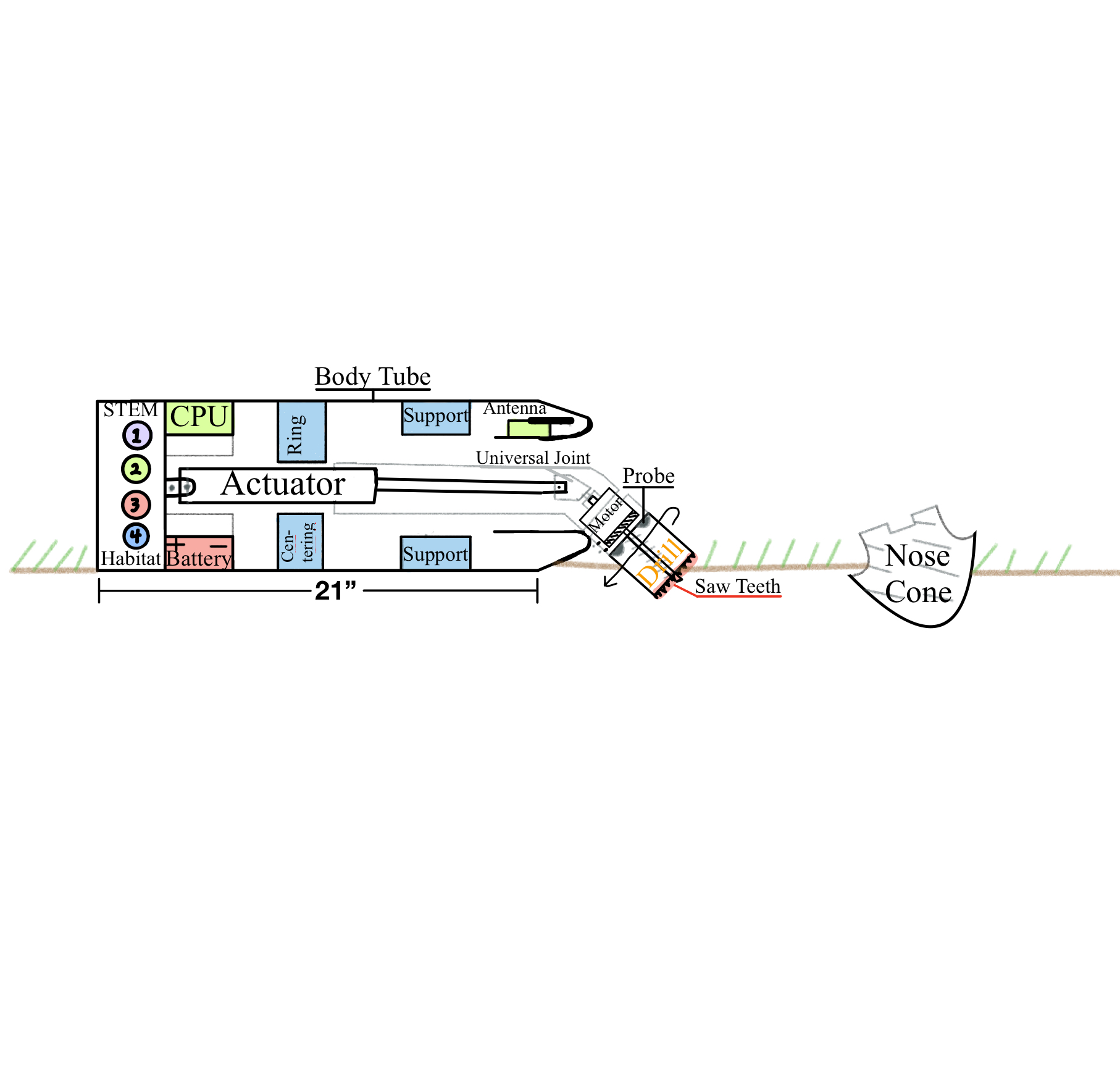
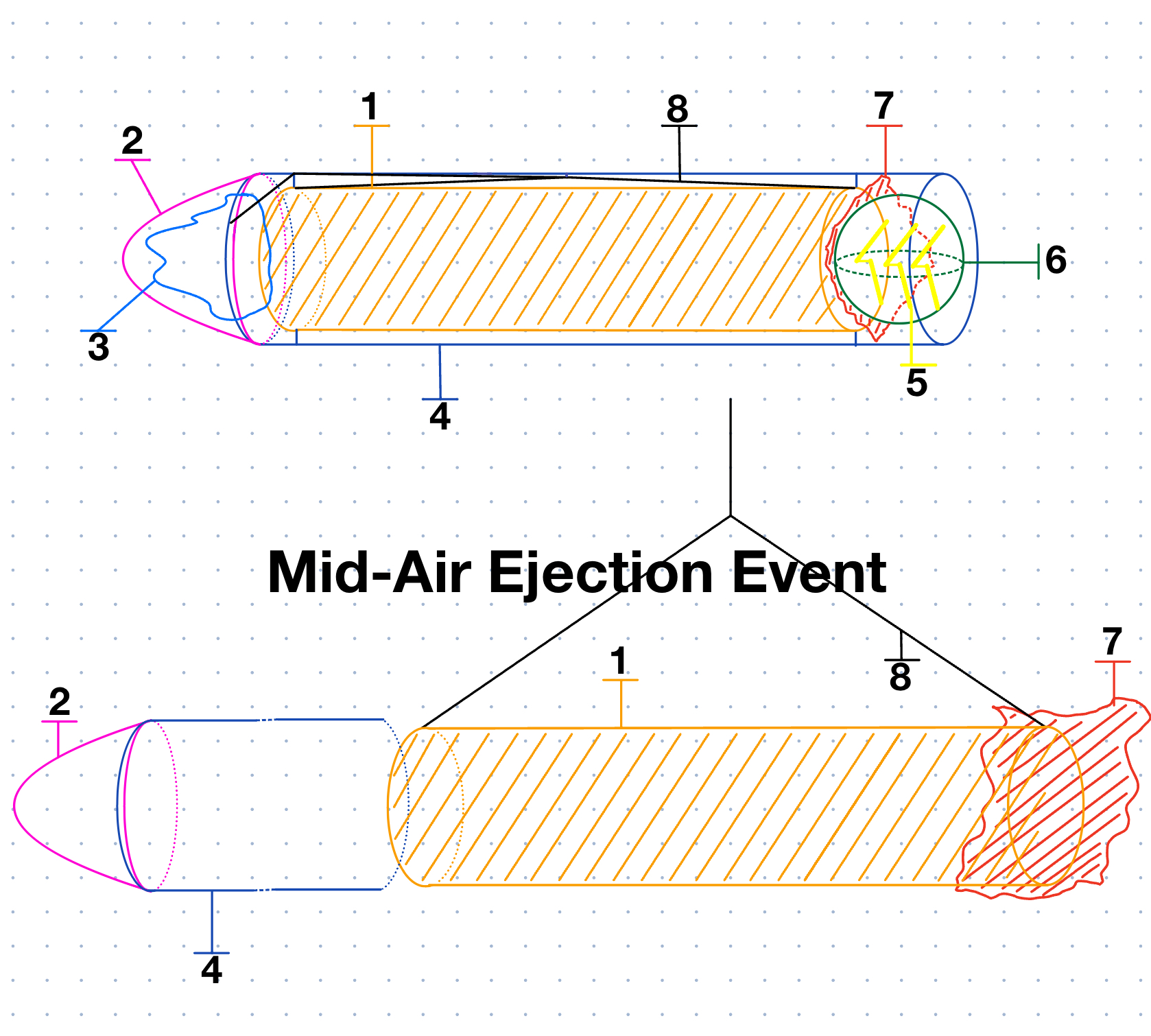
- Payload: Owned the payload design — a deployable soil retention and analysis system designed to collect at least 50 mL of soil and transmit its conductivity within 15 minutes (NASA requirements).
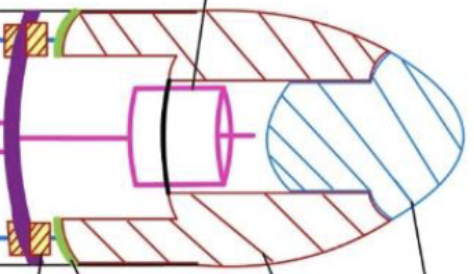
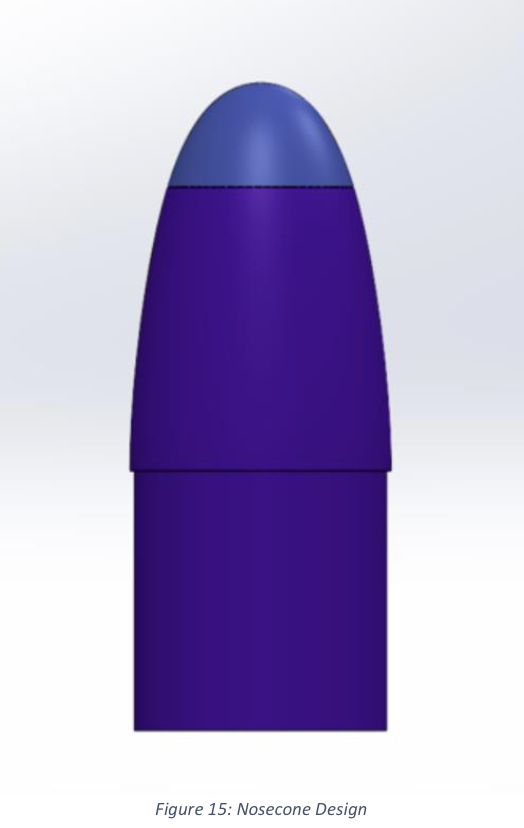
- Nose cone: Designed the nose cone NASA cited as the most novel — an ABS base with a TPU friction/plug-fit tip. Answered NASA’s safety concerns by halving the tip’s mass with low-infill interior meshes (including an Archimedean spiral) and adding retractable retention tabs. How the TPU tip came about.
- Funding: Personally raised ~$10k: a $5,000 Alabama Space Grant within 3 months of founding, $3,500+ from 15+ private donors, and $1,200 for capstone hardware.
- Aerodynamics: Conceived and led an ANSYS Fluent computational fluid dynamics (CFD) study of the 8 ft 7 in vehicle at max-q (213 m/s, Mach ~0.62, 4,664 ft Huntsville air, 5° angle of attack, SST k-ω turbulence model) on a 987k-element mesh with fin and nose inflation layers, staying under the 1M-element student license cap.
Results
- A CFD-derived center-of-pressure location, used to require the final center of gravity to sit at least 8 in ahead of the center of pressure for stability.
- Built a 25+ member team (6 with NAR certifications), funded from zero.
TPU nose cone: piston → nose tip → materials talk
The TPU tip idea came from a piston I made for a team beam engine, carried into the rocket, and turned into a talk to UAB’s materials engineering department.
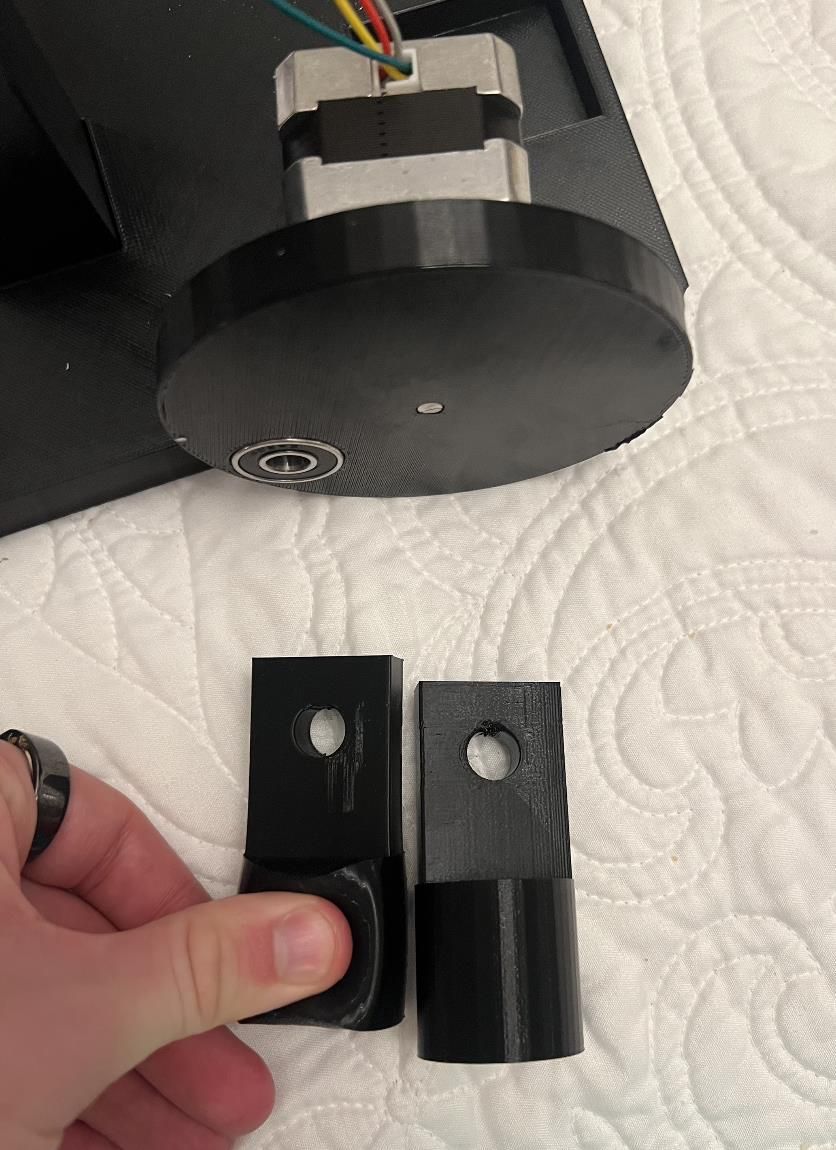
- 1. Piston (ME 478: Automated Manufacturing, UAB, Spring 2025): In a four-person team’s beam engine, many rigid PLA pistons never fit the moving four-bar mechanism. I switched just the piston to flexible TPU. It stretched to fit, never came loose in motion, and printed in 1 hour instead of 2, using an Archimedean spiral infill in Bambu Slicer to follow its round shape. Full Beam Engine story.
- 2. Nose cone tip: The payload had to deploy out of the nose, so I designed an ABS nose cone with a TPU plug-fit tip. To answer NASA’s concern about the tip coming loose, I halved the tip’s mass using low-infill interior meshes, including an Archimedean spiral, and added retractable retention tabs. A lighter, simpler tip can also be crushed in a press to find where and at what load it fails. NASA cited the nose cone as the most novel design.
- 3. Materials talk (December 2025): “TPU’s Influence on Additive Manufacturing,” a group presentation to UAB’s materials engineering department. I made all of the slides about the rocket parts. The capstone nose cone prompted the research. After comparing strength, durability, and flexibility, TPU was the best fit for the design.
What the talk covered: In published sources, TPU’s tensile strength is about 30–50 MPa vs. 40–70 MPa for PLA. PLA is stronger on paper but very stiff, while TPU bends, twists, and compresses without cracking and resists impact and wear. 95A TPU is firmer than 85A, which can clog extruders. TPU creeps under constant load, softens with heat, and suffers at sharp corners. Its strength depends heavily on infill, so a part can be stiff where it needs to be and flexible elsewhere.
Related: Notre Dame Rocketry | ACS | NASA USLI — Apogee Control System flaps and flight hardware.
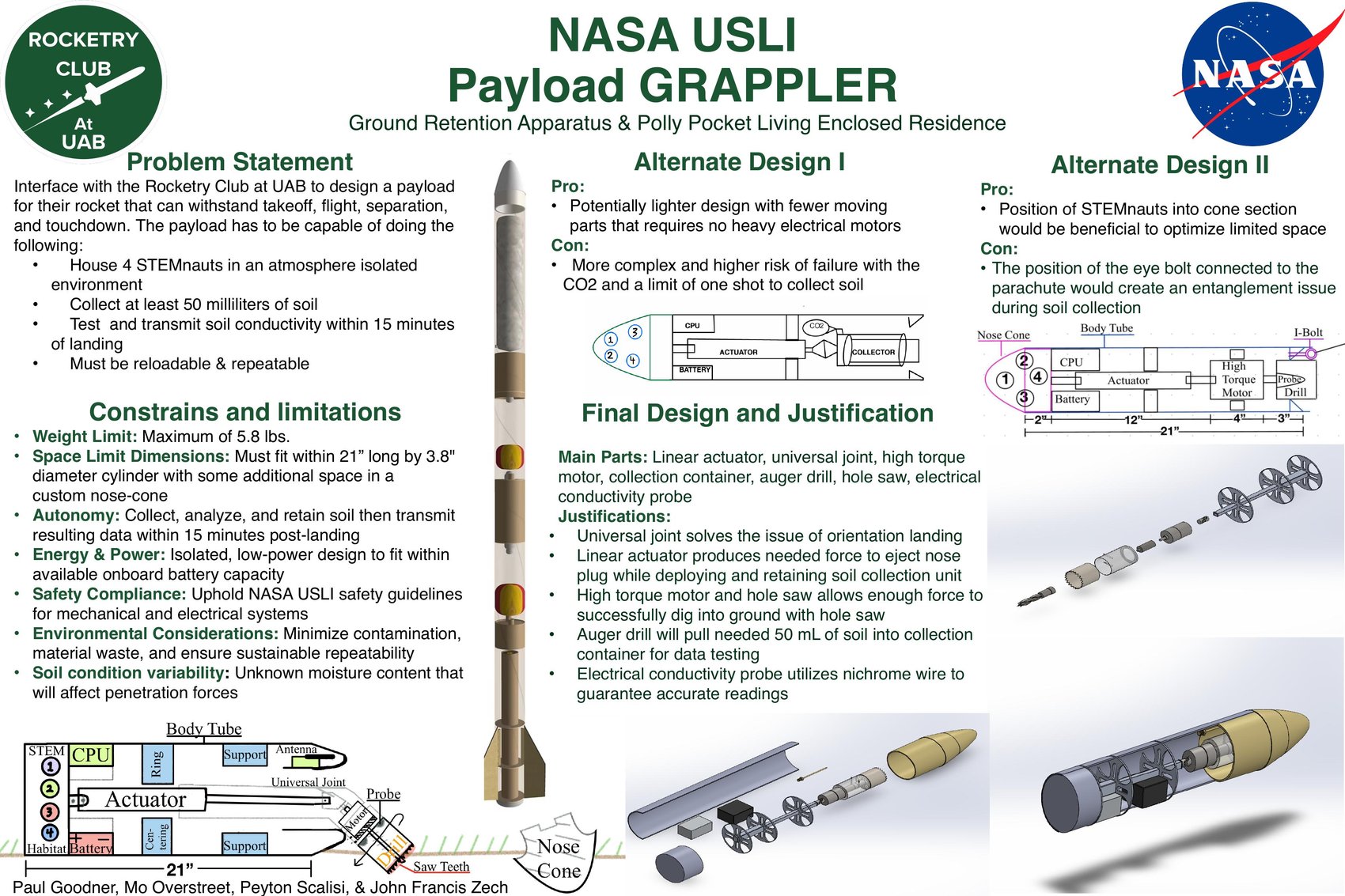 NASA USLI Payload GRAPPLER
Design poster for the UAB Rocketry Club payload — problem statement, alternate designs, and final GRAPPLER concept.
Open poster (PDF)